Leadership26 Aug 2009
Culture of Excellence
PG
Subramaniam P G
Growth Architect · Executive Coach · Author
Culture of Excellence
Culture of Excellence is rooted in Organizational Culture.
Schein (1992) defined organizational culture as:
"A pattern of shared basic assumptions that the group learned as it solved its problems of external adaptation and internal integration, that has worked well enough to be considered valid and, therefore, to be taught to new members as the correct way to perceive, think, and feel in relation to these problems."
Let us look at each key word in this definition. Each one tells us something real about how culture works.
a. Pattern
A pattern is a design. It is a way of doing things.
But a pattern also evolves over time. So culture is dynamic. What works today may not work tomorrow.
b. Shared
Sharing culture has always been a dream for managers.
Where does sharing stop? Is it enough to just communicate values to everyone?
Often, sharing starts and ends with a display of values. It rarely goes deeper into daily practice.
c. Learned
Culture evolves as people learn from experience.
Learning has two levels. Primary learning gives an immediate reaction. It is often reactive.
Secondary learning is different. It absorbs experience deeply. It can change how people live and respond going forward.
d. External Adaptation and Internal Integration
Learning must be converted into practice. This happens through adaptation and integration.
Adapting to external change is the essence of Darwin's Theory of Evolution. In organizations, experience must adapt to a changing business environment.
That same experience must also integrate with existing practices. If a new practice does not fit the larger system, it creates instability.
Change and instability are not the same thing. Change is desirable. Instability is not.
Good practice must benefit everyone. This includes internal stakeholders like employees. It also includes external stakeholders like customers and vendors.
e. Valid
Experience and learning must be valid. Only then can they reinforce how culture is communicated.
f. Taught
Culture is shown through symbols and practices. These must be taught to new employees.
Every person carries their own cultural background. This may not match the organization's culture.
It is everyone's job to show the culture clearly. This helps a newcomer absorb it, even if it feels like a shock at first.
g. Perceive, Think, and Feel
Newcomers must learn to perceive, think, and feel the culture of excellence.
This means members must walk the talk. Culture is not just spoken. It is lived.
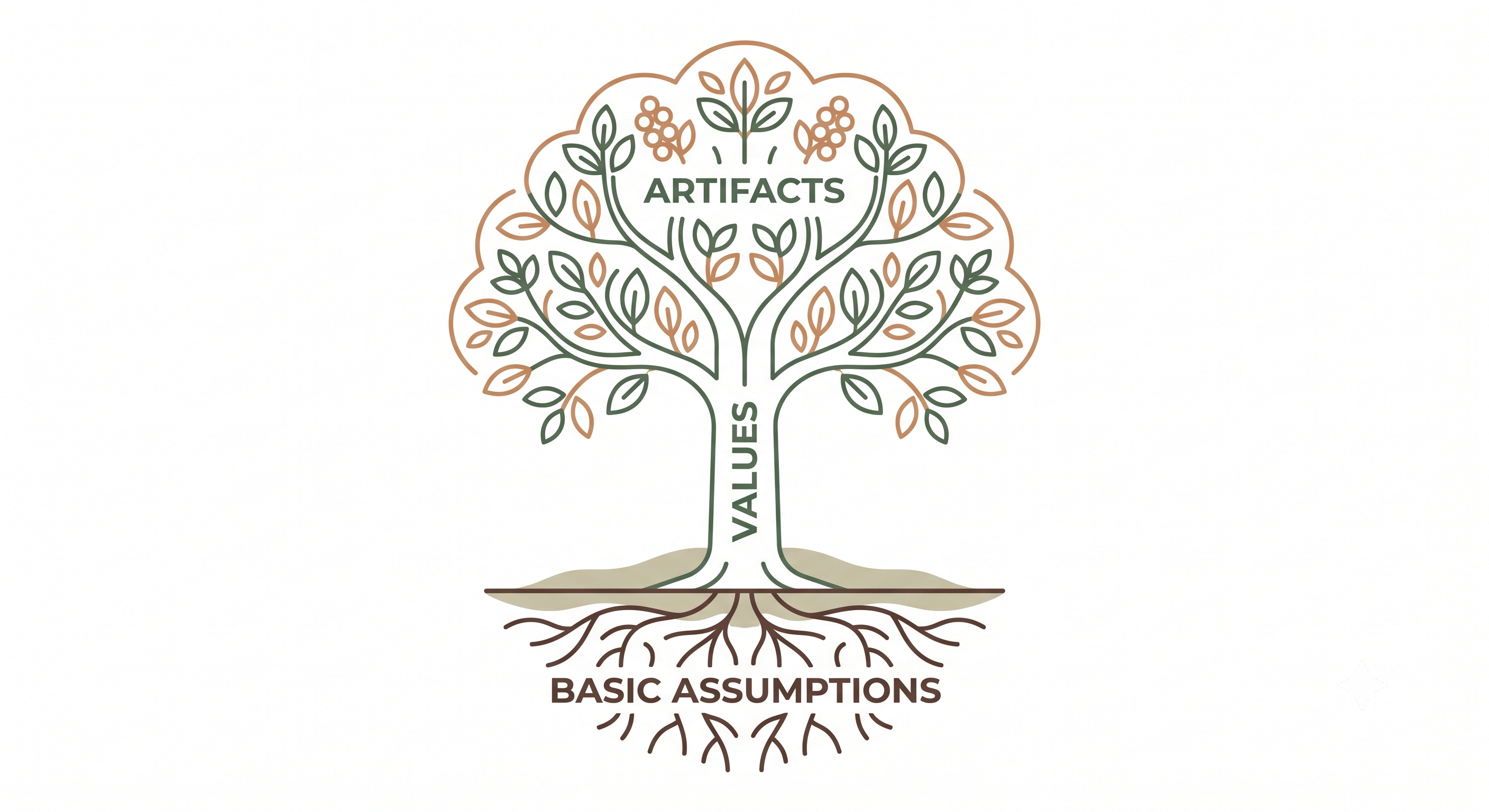
Artifacts, Values, and Basic Assumptions
Artifacts are what make culture visible. For a culture of excellence, this could be measured by systems or outcomes. For example, the level of innovation can be an artifact of excellence.
Values relate to attitudes and beliefs about what matters. These must be built into strategy, goals, and philosophy.
Take innovation as an example. Innovation must be part of the strategy. It must be a stated organizational goal. And the organization must genuinely believe in it.
Basic Assumptions are the deepest layer. These are beliefs about the organization, its people, and its environment. They must support the culture being built.
For innovation, one key assumption is tolerance for failure. This mindset fuels innovation.
When an assumption is reinforced again and again, it becomes part of the value system. Over time, it becomes part of the culture itself.
PG
Subramaniam P G
Growth Architect · Executive Coach · Author
Writing at the intersection of ancient wisdom and modern leadership since 2008.
About Subramaniam P G