
Enabling Growth24 Nov 2009
Ways to minimize the BOSS Effect in Meetings
PG
Subramaniam P G
Growth Architect · Executive Coach · Author
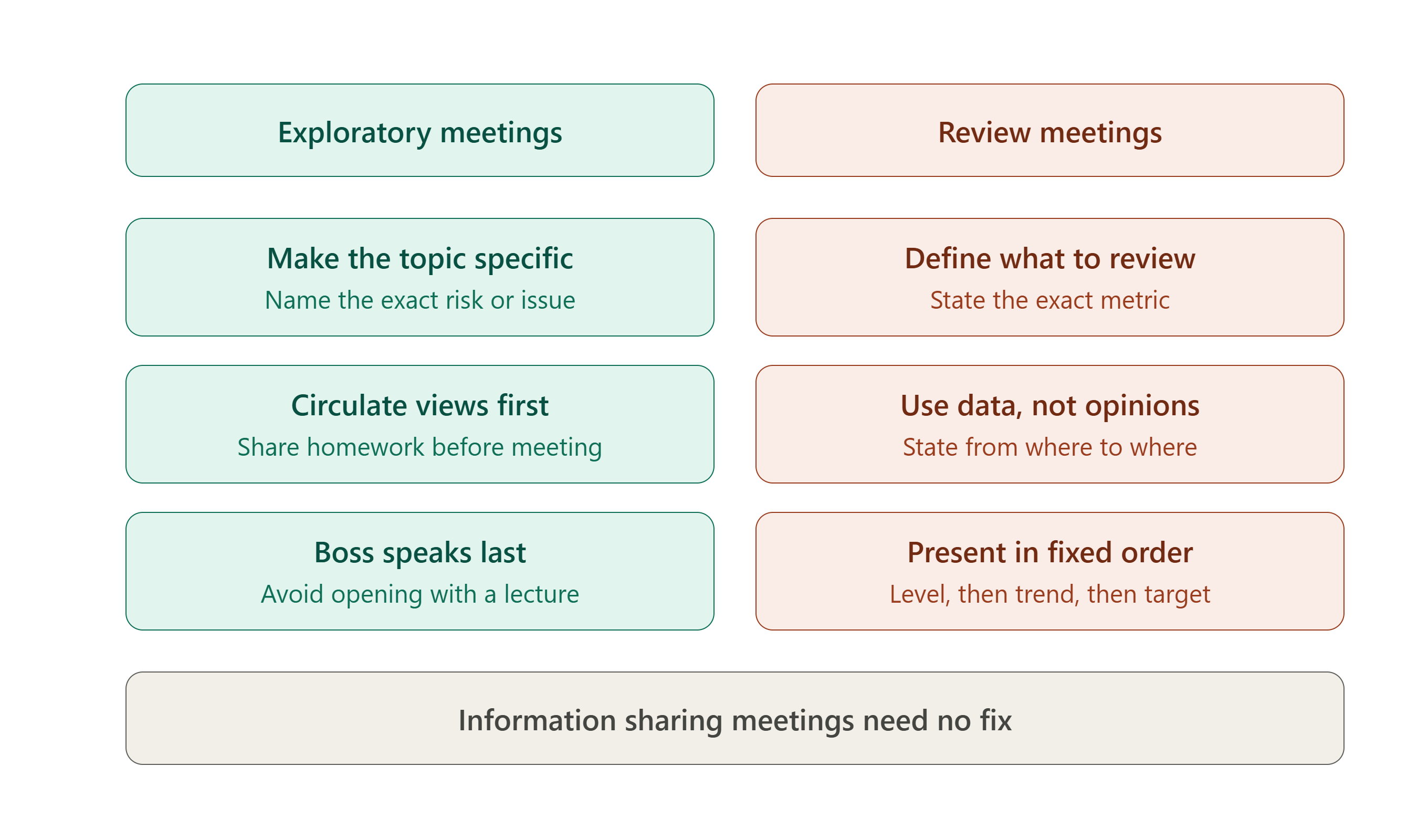
I saw this on LinkedIn, posted by a friend of mine. It is so true that most of us would not even think of disagreeing with a situation. This is the result of one or more of the following:
Rule 9 and Rule 10. Rule 9 says the boss is always right. Rule 10 says if the boss is wrong, refer to rule 9.
After centuries of ruling under a slavery-like environment, differing with the boss is often considered courageous, or in plain terms, suicidal. It is easier to avoid confrontation than to take that path.
Three Types of Meetings
The meetings I have experienced are of three types.
Exploratory
These meetings are often held to develop new plans, new approaches, or new strategies. The agenda is usually futuristic. Current information is used only to look into the future, to forecast or predict. It is more like brainstorming.
Review
These meetings are for reviewing the status of a project, performance against target, or operations. They involve presenting data on performance and comparative statements on that performance.
Information Sharing
These are meetings where a senior is expected to communicate on important issues, such as progress on union meetings or a special business situation.
The third type is not an area of concern. I would like to share my thoughts on how to minimize the impact of the boss in the first two types of meetings.
Exploratory Meetings
While the meeting is meant to be exploratory, it is necessary to bring objectivity into it. For example, if we are meeting to build a strategic plan for the business, the following steps can help:
Make the topic specific. Instead of saying "Business Strategy," say "Strategy to meet risk ABC."
Insist on homework on the topic and circulate opinions or views before the meeting. This rarely happens.
Most important of all, the boss should speak last. Most meetings begin with a lecture from the boss. Moving this to the end of the agenda can make the meeting more productive.
Review Meetings
The problem begins with not having an objective answer to the following questions.
What to review? Can we say "Sales Actual versus Budget for a period" instead of "Sales Department Performance"?
What data to review? Often, review comments on performance are subjective. For example, someone might say "sales have improved." Instead, we should ask, improved from where to where, and over what period?
The review presentation should include data and interpretation, presented in the following order:
- Current level of performance.
- Trend in performance, with a minimum of three data points.
- Comparison of performance with target or benchmark.
The interpretation must also include the link to the process that caused the change in performance.
I have listed these points based on my own experience. They cannot eliminate the impact of the boss on behavior during a meeting, but they can reduce it. The most important step toward this is the boss accepting a reduced role in the meeting.
PG
Subramaniam P G
Growth Architect · Executive Coach · Author
Writing at the intersection of ancient wisdom and modern leadership since 2008.
About Subramaniam P G